

Finding Nemo
#1 Our Journey Begins - The Ordinary World

Cut to the Chase:
Context matters: Just as Marlin’s trauma explains his overprotectiveness, school leaders must understand the past experiences that shape how staff, students, and families respond to change.
Perspective creates friction: The same ordinary world can feel safe to one group and limiting to another; leaders need to recognize and honor these different points of view.
Balance is key: Effective leadership finds the middle ground between protection and trust, creating space for growth while ensuring stability and support.
Films are often remembered for their endings. The climactic moments when the story’s purpose is brought into focus are why we cheer and cry at the movies. Those moments aren’t powerful simply because they are great scenes but because we have been with those characters from the beginning. We know where they have been and that understanding gives their triumph its meaning.
That is why every great story begins in the “ordinary world.” It’s the calm before the storm, the life the hero knows before they are called into adventure. In Joseph Campbell’s Hero’s Journey framework, the ordinary world is critical: it gives context, contrast, and humanity to what’s about to unfold.
The same holds true for leading change in a school district, building or classroom. Before the bold vision, before the rallying cry, before the leap into the unknown we must begin with the way things are.
Let’s unpack why this stage matters, what can go wrong if you skip it, and how leaders can use it effectively.
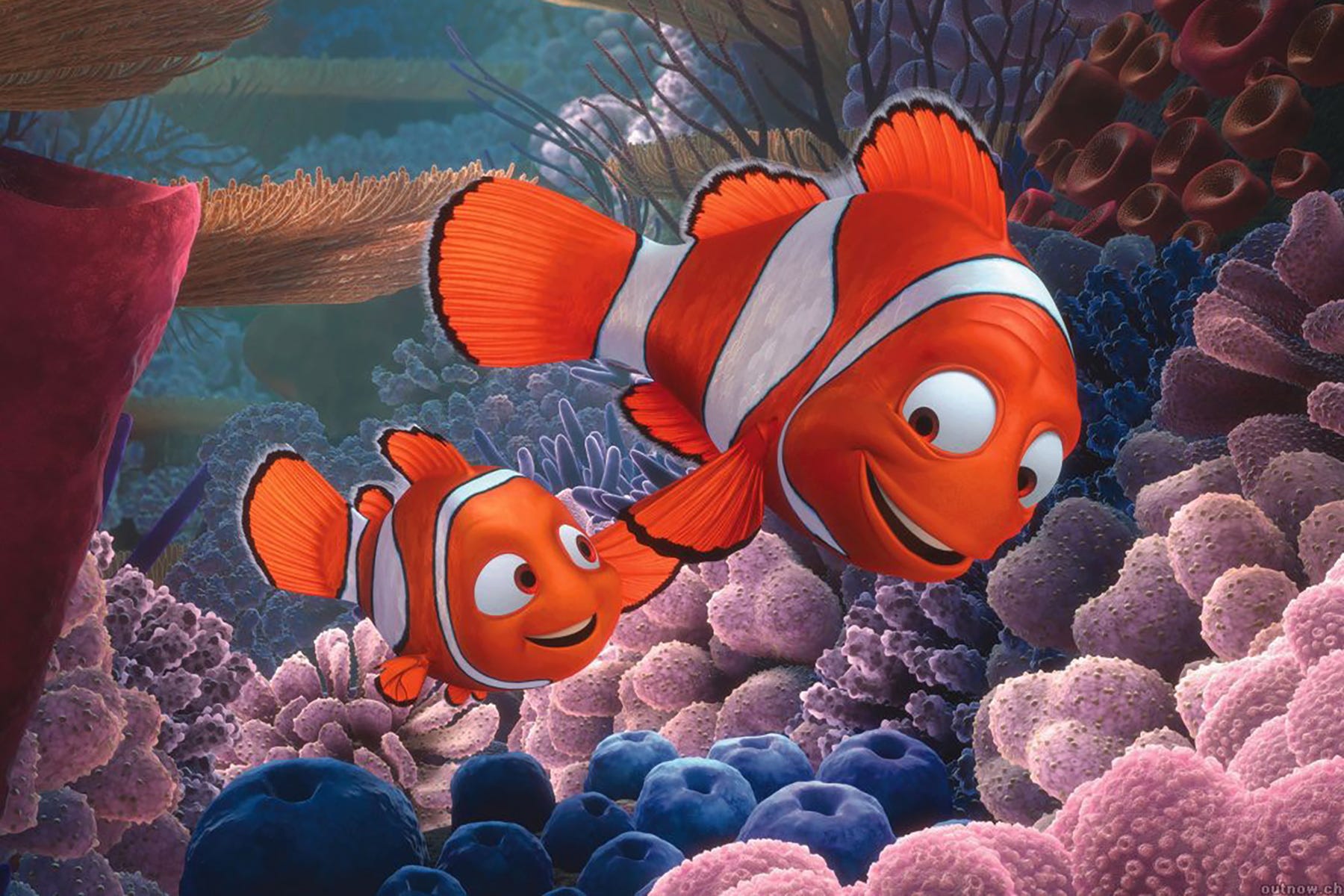
In the Pixar classic, Finding Nemo, the film opens with a heartbreaking prologue that sets the emotional foundation for the entire story. Marlin and his wife Coral have just moved into their new sea anemone home, brimming with excitement as they gaze at their pile of fish eggs. The moment is filled with warmth and promise, but it is shattered in an instant when a barracuda attacks. Marlin tries to protect his family, but he is knocked unconscious in the struggle. When he wakes, the reef is silent. Coral and all of the eggs…except for one. Cradling the lone survivor, Marlin names him “Nemo” and vows to protect him at all costs.
This tragic beginning explains everything about Marlin’s attitude when the story transitions into the “ordinary world” of Nemo’s first day of school. His grief and trauma manifest as constant hovering, micromanagement, and an almost comical level of overprotectiveness. What to others might look like a safe, ordinary reef, Marlin sees as full of hidden dangers. Even small risks feel overwhelming, and his fear of loss keeps him from trusting the wider world. As a result, Marlin clings too tightly to Nemo, while Nemo longs for freedom and independence.
Why the Ordinary World Matters
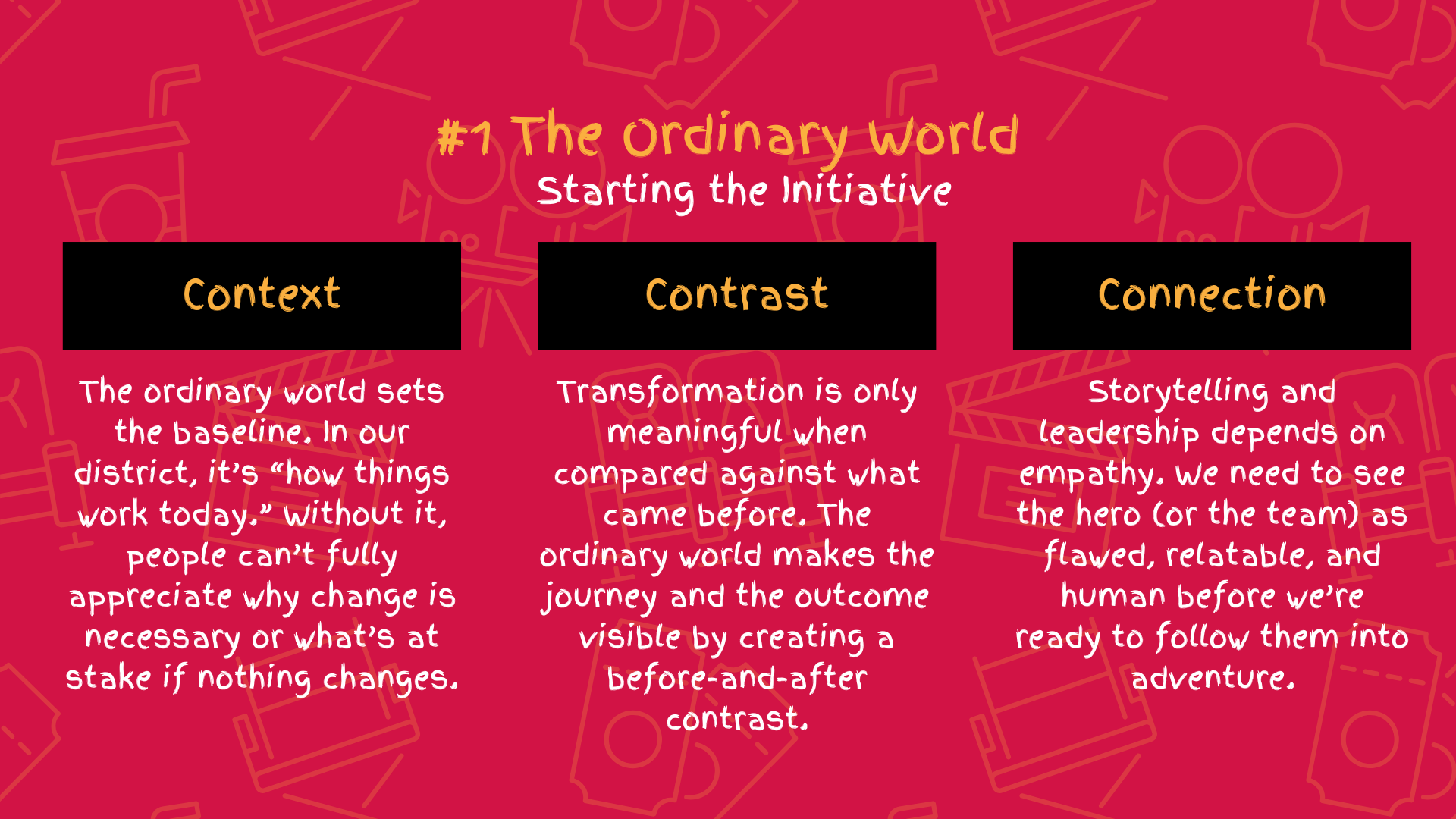
Context for Change
The ordinary world sets the baseline. In our district, it’s “how things work today.” Without it, people can’t fully appreciate why change is necessary or what’s at stake if nothing changes.Contrast and Stakes
Transformation is only meaningful when compared against what came before. The ordinary world makes the journey and the outcome visible by creating a before-and-after contrast.Human Connection
Storytelling and leadership depends on empathy. We need to see the hero (or the team) as flawed, relatable, and human before we’re ready to follow them into adventure.
The barracuda prologue works because it delivers context, contrast, and connection in one swift sequence. It provides context by showing the source of Marlin’s fear, turning his later overprotectiveness into a believable response rather than an exaggerated quirk. It creates contrast by first immersing us in the joy and hope of new life, only to strip it away and set up a world that feels far more dangerous to Marlin than it does to others. And it builds connection by letting us empathize with his loss, so that even when his behavior is frustrating, we understand the wound driving it and remain invested in his journey as a father.
Roadblocks and Risks in the Ordinary World
While this stage is necessary, it comes with challenges:
Complacency: People may see no reason to change—“This is how we’ve always done it.”
Blind Spots: Leaders may be too immersed in business-as-usual to recognize weaknesses.
Resistance to Naming Problems: Sometimes the ordinary world masks dysfunction. Pointing it out can feel threatening.
False Comfort: The ordinary world can feel deceptively safe, tempting organizations to avoid the risks of change altogether.
The early friction between Nemo and Marlin is fundamentally a matter of point of view. For Marlin, every shadow hides danger because he still carries the trauma of losing Coral and the other eggs. From his perspective, protecting Nemo means controlling every choice and limiting every risk. The ocean is not a place of wonder but of threats. Nemo, however, sees the world through very different eyes. To him, the reef is safe, colorful, and full of possibilities. What feels like protection to Marlin feels like suffocation to Nemo. Their clash on the first day of school isn’t just about rules or boundaries, it’s about how each interprets the same world. Marlin’s lens is fear, Nemo’s lens is freedom, and that difference in perspective sets up the central tension of the story: learning to balance caution with trust, and protection with independence.
So how can we use the ORDINARY WORLD as a source of productive tension like this film and not unnecessary tension that leads to frustration?
Strategies to Make the Most of the Ordinary World
Great leaders know how to use this stage to build momentum rather than stall. Here’s how:
Map the Current State
Use data, stories, and observations to paint a clear picture of the ordinary world. Make it visible, not assumed.Highlight Strengths and Weaknesses
Acknowledge what works and what holds people back. This keeps the conversation balanced and constructive.Build Empathy
Listen to employees’ experiences of the ordinary world. These stories foster trust and make change relatable.Create Urgency with Contrast
Show what happens if the organization stays in the ordinary world versus what’s possible if it changes. This contrast is your “before and after” story.Think Like a Storyteller
Treat this stage like the opening of a movie: set the scene, define the characters, and allow the flaws and tensions to show.
It is easy to ‘hope’ to accomplish these things in the early going of an initiative but we should be purposeful about using this valuable time to our advantage.
The first scene of Finding Nemo establishes the theme of fear versus trust, and that tension carries through the entire film. Marlin begins his journey consumed by fear, determined to control every aspect of Nemo’s life so he won’t lose him as he lost Coral and the other eggs. This overprotection creates the central conflict, pushing Nemo to rebel and sparking the adventure. Throughout the movie, Marlin encounters situations that force him to loosen his grip like trusting Dory as a partner, taking risks in the open ocean, and gradually recognizing Nemo’s capability.
Meanwhile, Nemo proves his resilience and independence, showing that growth comes through experience, not sheltering. By the end, Marlin learns to release his paralyzing fear and give Nemo the freedom he deserves, fulfilling the theme that real love requires trust, not control.
The Storytelling Power of the Ordinary World
Every great story leverages the ordinary world to build stakes.
Relatability: Audiences need a familiar anchor. In Finding Nemo, the reef is a world kids and adults can imagine living in. We like it there, so we feel the loss when Nemo is taken.
Foreshadowing: The cracks in the ordinary world point to the coming conflict. Marlin’s fear and Nemo’s frustration are not incidental…they set the stage for the adventure.
Motivation: The bond between Marlin and Nemo gives the quest meaning. Without the ordinary world, the journey would be empty action.
In districts, the same principle holds: if people can’t see and feel what life is like today, they won’t understand why they should risk stepping into the unknown.
The ordinary world is not filler. It’s the foundation of the story we are going to tell. By acknowledging both the context that shapes people’s behavior and the contrasting points of view that create friction, school leaders can build the empathy and connection needed to launch meaningful, lasting change.
Post Credit Scene:
In what ways might my past experiences, both successes and failures shape how I lead change today?
How might different stakeholders in my school (students, teachers, families) see the same “ordinary world” through completely different lenses?
Where am I holding on too tightly for the sake of safety, and how could creating more space for trust and independence lead to growth?